
The weekend field guide
National or regional knife show: how to choose
Large national knife show or a smaller regional one? Compare travel, crowds, variety and table availability to decide which show suits you as a buyer or a maker.
Choose a large national knife show if you want the widest choice of makers in one place and can afford the trip; choose a regional or local show if you want a shorter drive, a quieter room and more time to talk. Many people use both: a nearby show to learn what they like and a bigger one when they are ready to shop or sell seriously.
The words national and regional are labels, not guarantees. This guide offers a practical way to weigh travel, crowds, variety and cost, for visitors and for makers considering a table. Check each show's listing and the organizer's own page before you plan, because dates, venues and rules change.
What national and regional usually mean
A national show typically draws makers and buyers from many states and may fill nearby hotels. A regional show draws mostly from a few states or a metro area, and a local show mostly from within a short drive. These are common usages, not defined categories, so a show that calls itself national may be modest and a show with a local name may be large.
Read what the organizer says about itself. Look for the number of rooms, the types of tables, whether there are seminars or displays, and who the show is aimed at. Look at the listing on this site for the venue and the dates, and open its source for the organizer's own description. If the organizer describes a show clearly, that tells you more than its label.
Think about the trip
A larger show may mean a longer journey, a hotel stay and a busier room. The cost is not only admission. Add travel, lodging, meals, parking and time away from work or family. If you plan to buy, add the budget you want to spend at the tables. If you plan to sell, add table costs, travel for your inventory and the time you lose from your shop.
A regional show can be a day trip. You sleep in your own bed, spend less, and can leave when you have seen what you came for. For a first visit, many people find a nearby show the easiest way to decide whether the hobby is for them.
Think about what you want from the day
If your goal is to see many makers in one place, compare styles side by side and meet well-known names, a larger show gives more choice. If you want a quieter room, longer conversations or a chance to ask basic questions without a line behind you, a smaller show often suits better.
Buying for a collection
Collectors who want a specific kind of knife often attend several shows a year, because pieces appear at unpredictable times. Regional shows can have older knives that did not make it into the bigger rooms. Larger shows may bring more makers whose work you cannot see elsewhere.
Learning the hobby
Newcomers often learn fastest at small shows, where makers have time to explain steels, grinds and handle materials. A large show is easier once you know what you want to look at.
If you plan to sell
Larger shows may have different table availability and terms than smaller ones, and some are juried or fill early. Smaller shows may have open tables and a lighter schedule, which makes them a low-pressure way to try a display, test prices and learn how you like to sell.
Ask each organizer how tables are assigned, what they cost, what is included, when setup begins and what the cancellation terms are. Do not judge a show only by its size. A smaller show with the right audience for your work may serve you better than a big show where your style is one of many. Our guide to selling knives at a custom show or a gun and knife show covers the questions to ask.
A worked example of weighing two shows
Suppose you are choosing between a large show that needs a hotel stay and a smaller show an hour away. Write the same questions under each: how far, how long you will stay, what it will cost in total, what you hope to see, whether tables are available if you want one, and what the organizer says about the audience. Add a line for how you will feel at the end of the day. Some people leave a big show tired and inspired; others leave a small show with three good conversations and a knife they love.
If the answers are close, pick the nearer show this time and the other one next time. Shows repeat, and the nearer one teaches you what to look for at the bigger one. Ask people at your first show which events they attend, because word of mouth is often the best guide to which show suits you.
Compare shows on the same checklist
Make a short list of shows you are considering and compare them on the same points: date, distance, admission, parking, public hours, whether tables are offered to sellers, and what the organizer says about the audience. Use the state pages to see what is nearby and the this-weekend page to spot something close to hand.
Listings link to the organizer's source, and admission and hours appear when the source states them. Where something is missing, the organizer is the right person to ask.
Confirm before you travel
Dates, venues and public hours change. Before you book a hotel or buy a ticket, open the organizer's website from the listing and confirm. If you notice an error on the listing, use the correction link, with a public source if possible, so the operator can review it. See how listings are verified for how this directory handles sources.
Frequently asked questions
Which kind of show is better for a first visit?
It depends on how far you are willing to travel and how much you want to see. A nearby show is an easy first step, and you can move to a larger one later.
Do larger shows cost more to attend?
Admission and parking vary from show to show. Check the listing and the organizer's page, and add travel and lodging to your own estimate.
How far ahead should I plan?
Plan early for shows that need lodging, and confirm the dates with the organizer before you book anything that is hard to cancel.
Are dates in the directory always current?
We cite the source for each listing, and organizers can change plans. Confirm with the organizer before you travel.
Is a regional show good for selling?
It can be, especially as a low-pressure way to try your display and prices. Ask the organizer about the usual audience and table terms.
Where can I see shows by state?
Use the state pages from the main knife show hub, and the this-weekend page for events close to the present date.
Put your plan into motion
Find your next show.
Use the listing's official source to confirm the latest dates, public hours and entry rules.
Find shows in this directoryKeep planning
More useful guides
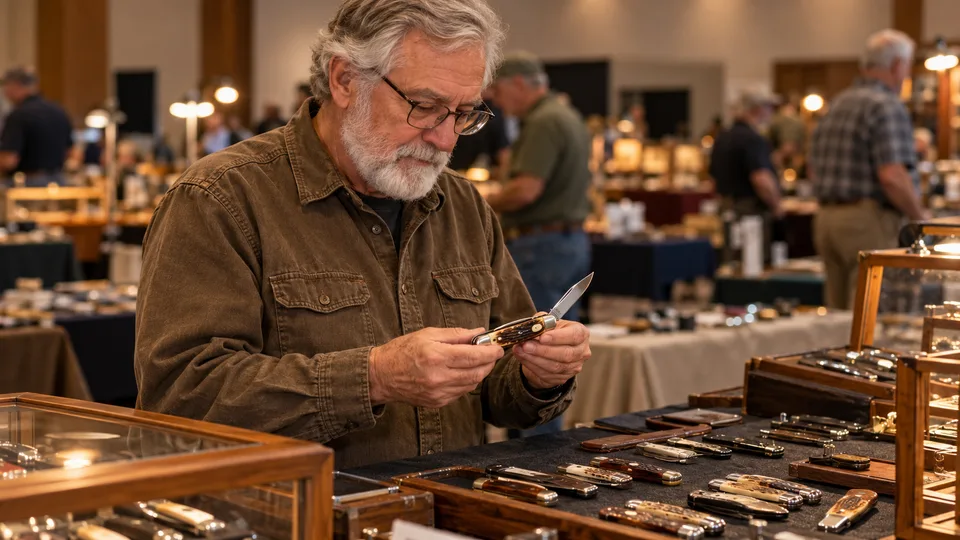
Planning your first show: a visitor checklist
Choose a show that suits your interests, confirm the practical details and keep the organizer’s information handy before you travel.
Read guide : Planning your first show: a visitor checklist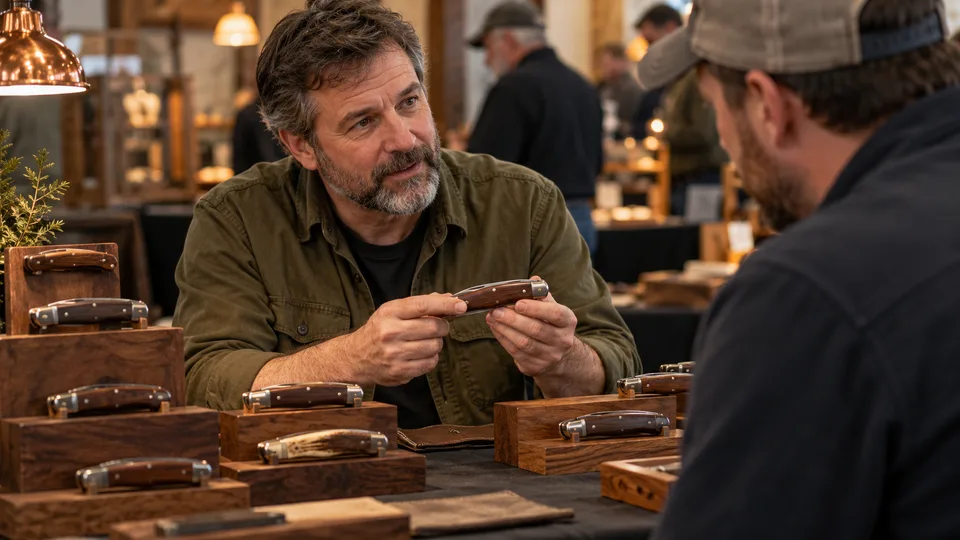
Preparing to sell at a knife show: a seller checklist
Confirm your seller application, table equipment, setup time and organizer terms before booking a place at a knife show.
Read guide : Preparing to sell at a knife show: a seller checklist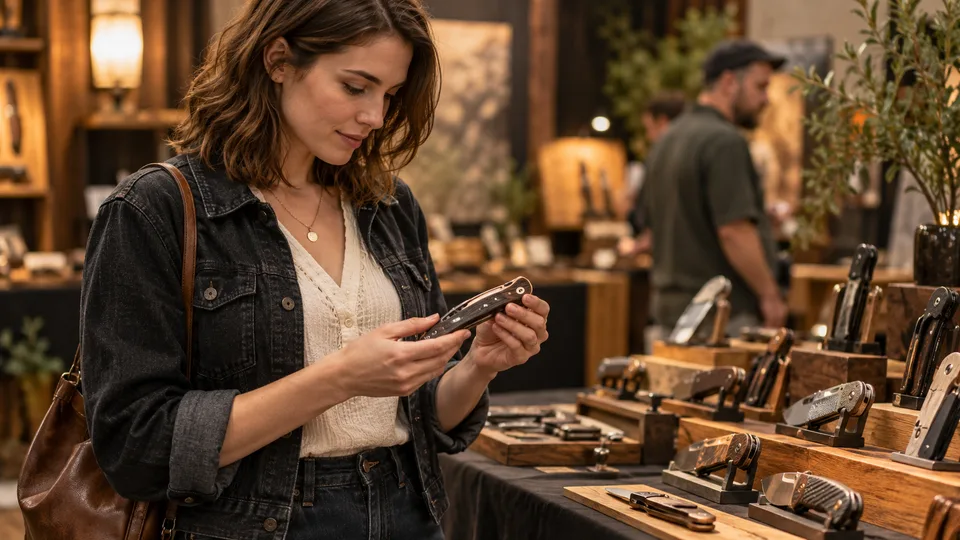
Your first knife show: buyer etiquette and what to expect
What to expect at your first knife show: how to browse, handle blades politely, ask good questions and pay, so makers and dealers want to talk with you.
Read guide : Your first knife show: buyer etiquette and what to expect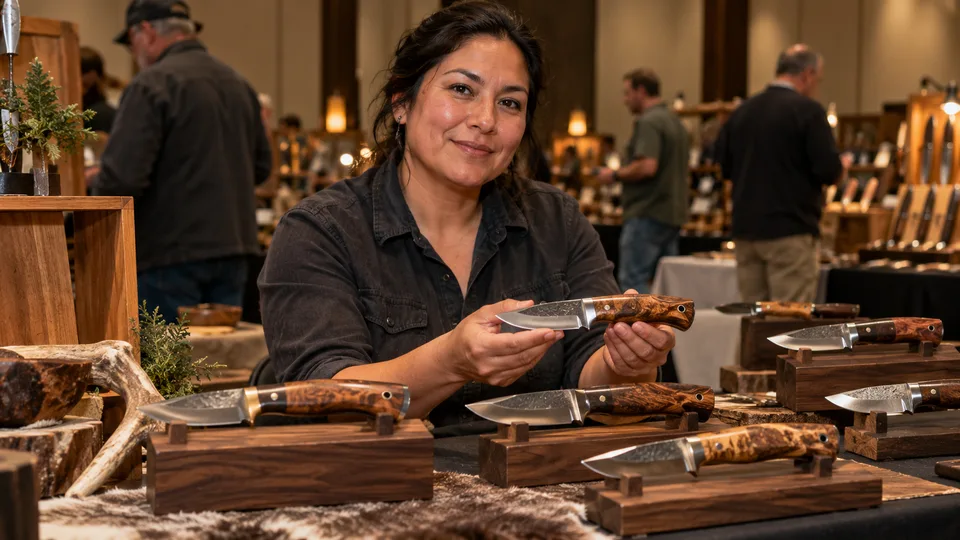
Selling knives: a custom knife show or a gun and knife show?
Choosing where to sell knives: how custom knife shows and gun and knife shows differ in audience, table terms and display, and what to ask the organizer first.
Read guide : Selling knives: a custom knife show or a gun and knife show?
Knife shows beyond the biggest national shows: how to find smaller ones
How to find smaller, regional and specialty knife shows beyond the biggest names, and what to check about each organizer, venue and audience before you go.
Read guide : Knife shows beyond the biggest national shows: how to find smaller ones